If you have been looking into psychedelics in the Netherlands, you have probably come across both terms: magic mushrooms vs magic truffles. Many people assume they are exactly the same. Others think they are completely different.
The truth sits somewhere in the middle.
They come from the same type of fungus and contain the same active compound, psilocybin. The real differences are in how they grow and how they are treated under Dutch law.
Let's keep it simple and clear.
Short Answer: Same Fungus, Different Form, Different Law
If you have been reading about psychedelics in the Netherlands, you have almost certainly run into both terms: magic mushrooms vs magic truffles. Many people assume they are exactly the same thing. Others are convinced they are completely different products with different effects.
The truth sits somewhere in the middle, and the confusion is understandable.
Magic mushrooms and magic truffles come from the same type of fungus and contain the same active compound: psilocybin. The differences are in three places. They grow in different parts of the fungus (above ground vs underground). They have a different appearance and texture. And, most importantly for anyone in the Netherlands, they are treated very differently by Dutch law.
In this deep dive we will walk through the biology, the chemistry, the subjective experience, the legality across Europe, and the practical considerations of choosing one over the other. By the end you will know exactly what people mean when they argue about truffles versus mushrooms and why, in 2026, the conversation matters more than ever.
What Are Magic Mushrooms?
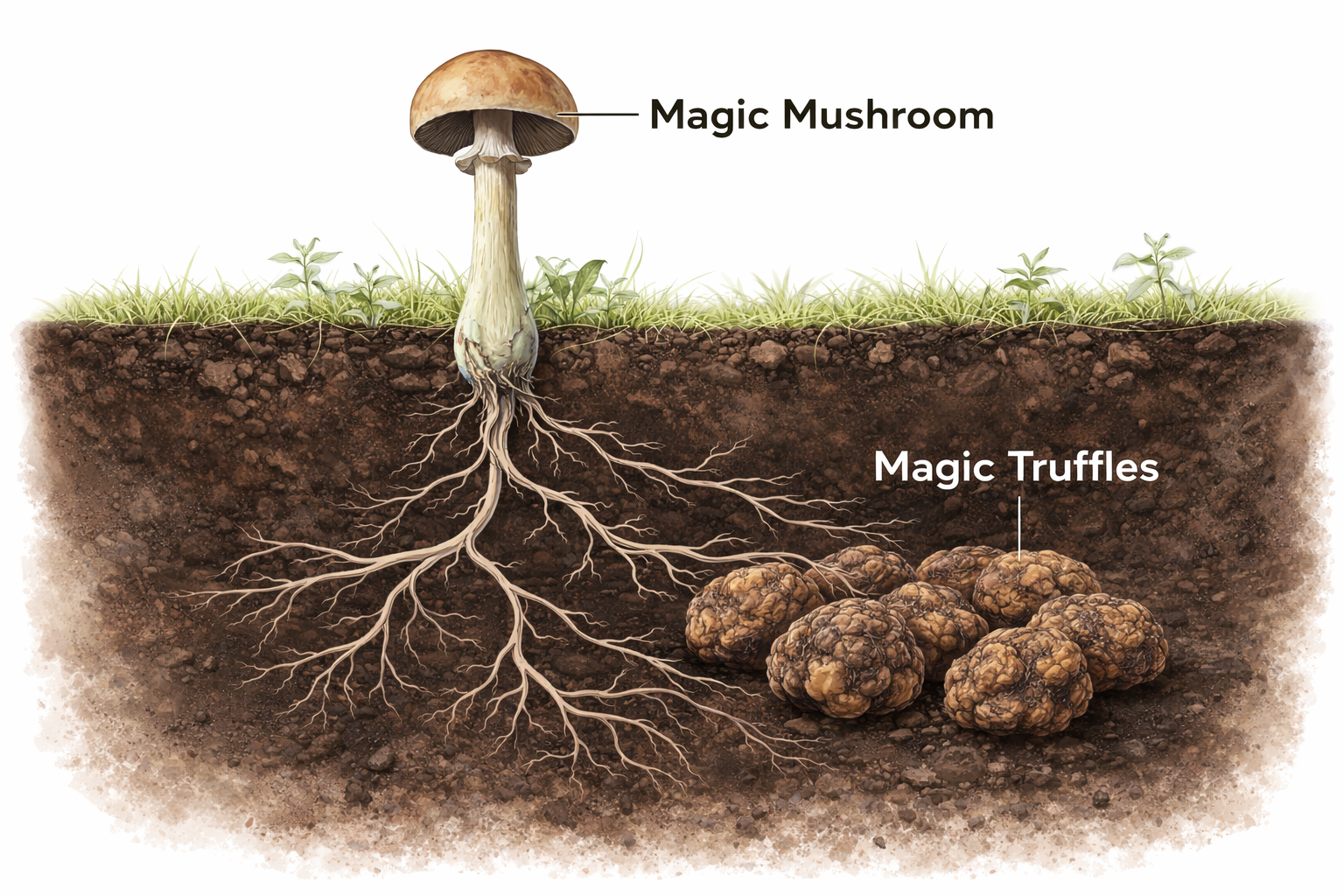
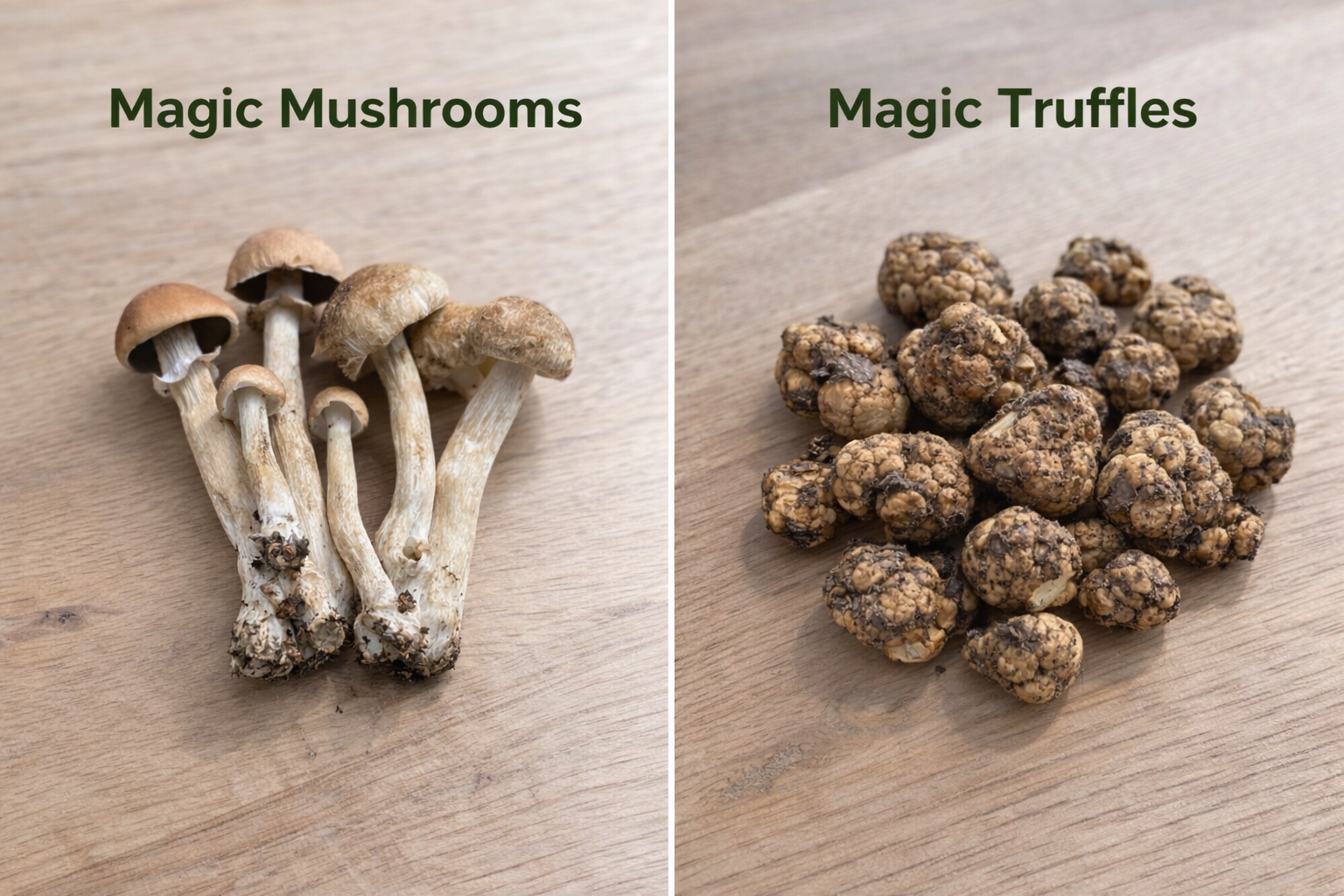
Magic mushrooms are the visible, above-ground fruiting bodies or certain species of fungi that naturally produce psilocybin and its active metabolite psilocin. When the mycelium (the underground network of fungal threads) finds the right conditions of moisture, temperature and substrate, it pushes up these fruiting bodies, what we recognize as mushrooms, to release spores and reproduce.
The most famous psilocybin-producing species is Psilocybe cubensis, which includes well-known strains such as Golden Teacher, Colombian, Mazatapec and B+. If you want a closer look at one of the most popular varieties, our complete guide to Golden Teacher mushrooms walks through their history, effects and characteristics in detail. For people who want to compare strains before they grow, we also have a Golden Teacher vs Colombian comparison covering both popular options.
When consumed, psilocybin is converted in the body into psilocin, which interacts primarily with serotonin 5-HT2A receptors in the brain. The result is the classic psychedelic experience: altered perception, emotional shifts, visual changes, and a different relationship with time and thought.
In the Netherlands, fresh magic mushrooms were banned on December 1, 2008. Since that date, it has been illegal to sell, cultivate, or possess them for retail purposes. They were added to List II of the Dutch Opium Act, which covers so-called “soft drugs”.
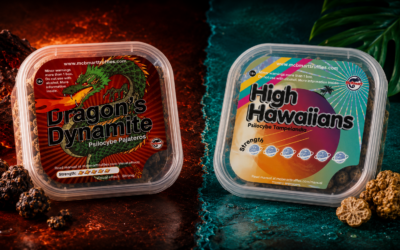
This often surprises visitors. Amsterdam is so strongly associated with psychedelic culture that many tourists assume mushrooms are still openly available. They are not. What you find in licensed smart shops today are magic truffles, a closely related but legally distinct product. (We will get to why in a moment.)
It is also worth knowing that mushrooms can be sold either fresh or dried. If you want to understand how that affects potency, storage and dosing, our article on fresh vs dried magic mushrooms goes into the practical details.
What Are Magic Truffles?
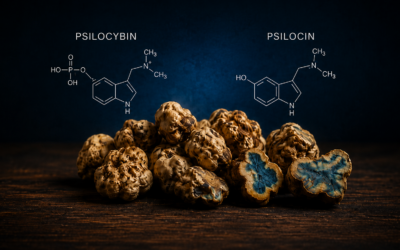
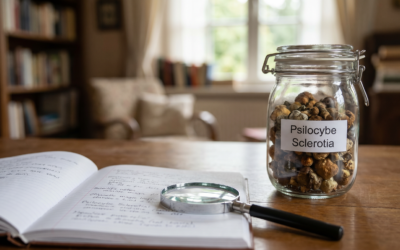
Magic truffles are dense, lumpy, underground masses formed by the same fungus that produces magic mushrooms. They are called technically sclerotia and that scientific name matters, because it is the reason they are legal in the Netherlands today.
Sclerotia are not actually truffles in the culinary sense. Real truffles (the kind chefs great over pasta) belong to a completely different group of fungi, the genus Tuber. Magic truffles only resemble culinary truffles in shape and the fact that they grow below the surface. Inside, they are compact knots of hardened mycelium that the fungus produces as a survival organ, a kind of biological emergency reserve.
When environmental conditions are not favorable enough for the mushroom to form (too dry, too cold, too much disturbance), certain Psilocybe species — most notably Psilocybe mexicana and Psilocybe tampanensis — channel their resources into building sclerotia instead. Inside these dense nodules, the fungus stores nutrients and waits out the bad times. When conditions improve, the sclerotium can sprout new mycelium and eventually produce mushrooms again.
Because sclerotia are produced by the same organism, they contain the same psychoactive compounds: psilocybin, psilocin, baeocystin and norbaeocystin. The chemistry is essentially identical to the chemistry inside a mushroom of the same species.
If you would like a deeper standalone explanation of how magic truffles work, what species they come from, and why they have become the Dutch psychedelic of choice, our complete guide to magic truffles is a good companion article to this one. For Dutch readers we also recommend our overview on what are psychedelic truffles and how do they work.
The Similarities Between Magic Mushrooms vs Magic Truffles
Most discussions focus on what is different about mushrooms and truffles. To get a balanced view, it is just as important to understand what they share.
Both products:
- Come from the same genus of psilocybin-producing fungi (mostly Psilocybe species).
- Contain the same primary active compounds: psilocybin, psilocin, baeocystin and norbaeocystin.
- Are converted in the body into psilocin, which is what actually crosses the blood–brain barrier.
- Act on the same serotonin receptors and produce the same fundamental class of effects.
In practical terms, both mushrooms and truffles can lead to:
- Changes in visual and auditory perception
- Emotional intensity, with shifts between euphoria and introspection
- Open-eye and closed-eye visuals (patterns, geometry, breathing surfaces)
- A different sense of time, often described as time slowing down
- Deeper introspection and a sense of connection or “unity”
- A so-called “afterglow” of openness and clarity in the days following the experience
The structure differs. The chemistry, in the broad sense, does not.
Quick Comparison
Are Magic Mushrooms Stronger Than Magic Truffles?
This is one of the most popular questions in the magic mushrooms vs magic truffles debate, and the answer is more nuanced than the usual “mushrooms are stronger” cliché.
Potency depends on several factors:
- Species and strain — different species naturally produce different amounts of psilocybin.
- Fresh or dried — drying removes water and concentrates the active compounds dramatically.
- Age and growing conditions — younger fruiting bodies and well-grown sclerotia tend to be more potent.
- Dosage — ultimately, how much you take matters more than the form.
On a dry weight basis, dried Psilocybe cubensis mushrooms typically contain a higher concentration of psilocybin per gram than dried sclerotia of P. mexicana or P. tampanensis. That is where the “mushrooms are stronger” reputation comes from.
However, that comparison is misleading in practice. Truffles are almost always sold fresh, which means they are about 70–75% water by weight. Dried mushrooms have only about 10% water. So a gram-for-gram comparison between fresh truffles and dried mushrooms is comparing apples and pears.
When you adjust for water content, fresh sclerotia can actually be quite comparable to fresh mushrooms of the same species. And when you adjust dosing accordingly — typically 10–15 grams of fresh truffles for a moderate experience, versus 1.5–2 grams of dried mushrooms — the intensity of the experience can be very similar.
In other words: a high dose of truffles can absolutely feel stronger than a low dose of mushrooms. It is the dose that matters, not whether the fungus grew above or below the soil.
If you would like a clearer breakdown of how different amounts influence intensity, our detailed magic truffle dosage guide walks through this in much more depth, from microdosing to high-dose territory.
Do They Feel Different?
Because both contain the same compounds, the core subjective experience of mushrooms and truffles is very similar. Visuals, emotional waves, introspection and time distortion all appear in both. Anyone who tells you that one produces “pure spiritual visions” while the other gives “only body high” is usually selling you a story.
That said, experienced users do sometimes report subtle differences in feel:
- Onset — truffles, eaten fresh, are sometimes described as having a slower, more gradual come-up. Dried mushrooms can hit a little harder and faster, especially on an empty stomach.
- Bodily sensation — some users describe truffles as having a slightly heavier body feel, while mushrooms feel a bit more “head-focused”. This is anecdotal and not well supported by scientific research.
- Plateau length — the overall duration is similar, usually around 4–6 hours of main effects, but the peak shape can feel different person to person.
Honestly though, these differences are dwarfed by other factors. How much you take, your mindset going in, who you are with, and the environment you choose will shape your experience far more than whether the fungus came from above or below ground.
For practical guidance on the timeline of effects, you can read our article on how long magic truffles last, which breaks the trip into clear phases. If you are wondering what to actually do during a trip, our piece on Fun things to do during a truffle trip is full of practical ideas.
Pros and Cons of Magic Mushrooms vs Magic Truffles
When choosing between the two — assuming you are in a country where one or both are accessible — context matters far more than potency.
Magic Mushrooms
Pros
- Long historical and cultural track record across many traditions.
- Easier to measure dosage when properly dried.
- Slightly higher psilocybin concentration per gram (dried).
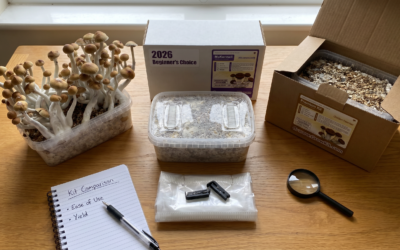
- Available as grow kits in many places, including the Netherlands, where finished mushrooms are illegal but mushroom grow kits for personal cultivation are not.
Cons
- Illegal to buy as a finished product in most European countries, including the Netherlands.
- Legal risks when crossing borders.
- Not available in licensed Dutch smart shops.
- More room for gray-market quality issues outside regulated channels.
Magic Truffles
Pros
- 100% legal to buy, possess and use in the Netherlands.
- Sold through licensed smart shops with clear packaging, batch info and dosing guidance.
- Accessible for visitors and EU customers via legal shipping vendors.
- Quality control: produced commercially under regulated conditions.
- Ideal for first-time users who want a more standardized, predictable starting point.
Cons
- Strong, earthy taste that some people find unpleasant.
- Slightly milder per gram than dried mushrooms (compensated by larger doses).
- Less culturally familiar outside the Netherlands and Germany.
- Shorter shelf life when fresh — proper storage matters (see our guide on how to store magic truffles).
If you are leaning towards truffles, it is worth reading our article on how to use magic truffles responsibly before you start. Preparation and intention make a much bigger difference than people expect.

Choosing Between Mushrooms and Truffles: A Practical Guide
For most readers, the practical question is not which one is “better” in some absolute sense. The question is: which one is right for me, given where I live and what I want to do?
A few simple guidelines:
- If you live in the Netherlands or are visiting — truffles are the legal, safe, regulated option. Mushrooms are not legally available for retail purchase.
- If you want to grow at home — grow kits are legal in the Netherlands and produce mushrooms (not truffles). Just keep in mind that the moment the mushrooms are harvested, they technically fall under the Opium Act, so this is for personal cultivation only.
- If you are microdosing — both forms work, but truffles tend to be more convenient because they are sold in small, consistent packages. Our complete guide to microdosing with truffles and overview of microdosing protocols lay out the practical schedules.
- If you are a beginner — truffles offer a slightly gentler learning curve simply because dosing is easier to control with fresh, packaged product. Either way, start low.
- If you are traveling — never carry truffles or mushrooms across an international border. Buy where it is legal, consume where it is legal, and leave it there.
Safety, Set and Setting: What Actually Shapes the Experience
If there is one message that experienced users want beginners to hear, it is this: the form of the fungus matters far less than how you approach the experience.
The same dose of the same truffle can produce a beautiful, life-affirming afternoon in one setting and an overwhelming, anxious experience in another. The two big variables are:
- Set — your mindset, mood, intentions, mental health and physical health going in.
- Setting — where you are, who you are with, the noise, the temperature, the level of safety you feel.
A moderate dose taken with a trusted friend in a calm, familiar environment tends to be a fundamentally different experience from the same dose taken alone in an unfamiliar, chaotic setting. This is true for both mushrooms and truffles, and it is true at every dose level.
A few practical safety points worth remembering:
- Never mix with alcohol or other drugs. Combinations dramatically increase risk and reduce predictability.
- Be careful with prescription medication, especially SSRIs, MAOIs and lithium. Consult a healthcare provider before using psilocybin if you are on any medication.
- Have a sober trip-sitter for higher doses, especially if it is your first time.
- Wait until you are in a stable mental state. Psilocybin can amplify whatever is already going on inside you.
- Start low. You can always take more next time. You cannot undo too much.
These are not legal restrictions; they are common sense from a community that has been using these substances for a very long time. The Trimbos Institute publishes excellent, neutral Dutch-language harm-reduction information that we would recommend to any new user.
Frequently Asked Questions
Are magic truffles the same as magic mushrooms?
Biologically, yes. They come from the same fungus and contain the same active compounds. Visually and legally, no. Mushrooms are the above-ground fruiting body and are illegal to sell in the Netherlands. Truffles are the underground sclerotia and are legally sold in licensed smart shops.
Are magic truffles legal in the Netherlands?
Yes. Magic truffles (sclerotia) are not listed in the Dutch Opium Act and are completely legal to buy, possess and use in the Netherlands. They are sold by licensed smartshops and online retailers like Mindrush. For full legal details, see our magic truffles legality page.
Why are truffles legal but mushrooms are not?
When the Dutch government banned psilocybin-containing mushrooms in 2008, the law specifically named the fruiting bodies (mushrooms). Sclerotia (truffles), which are a different biological structure, were not included. Under the Dutch principle of legality, that omission means truffles remain legal.
Are magic mushrooms stronger than magic truffles?
On a dry weight basis, dried mushrooms typically contain more psilocybin per gram than dried truffles. But since truffles are usually sold fresh (about 70% water), the typical comparison is not apples to apples. With proper dosing, both can produce experiences of equal intensity. Form matters less than dose.
How much truffle equals how much dried mushroom?
A rough rule of thumb is that about 10 grams of fresh truffles produces an experience roughly comparable to 1 gram of dried Psilocybe cubensis mushrooms. However, this varies between species and individuals. Our truffle dosage guide gives more precise ranges.
Are magic truffles safe?
Psilocybin has a relatively low physical toxicity and a strong long-term safety profile compared to most controlled substances. That said, psychological risk is real, especially in people with a personal or family history of psychosis or severe mental illness. Always start low, prepare your set and setting, and avoid combining with other substances. If you have any mental health concerns, speak to a healthcare professional first.
Can magic truffles be used therapeutically?
There is growing clinical interest in psilocybin-assisted therapy for conditions like treatment-resistant depression and end-of-life anxiety. In the Netherlands, this is currently limited to clinical trials. Truffle-based “retreats” and coaching sessions exist commercially but are not regulated medical treatments.
Do magic truffles expire?
Yes. Fresh truffles last roughly 2–3 months sealed in the fridge, and shorter once opened. Improper storage can lead to mold, which is dangerous. Our guide on storing magic truffles explains how to maximize shelf life.
Are spores and grow kits legal in the Netherlands?
Yes. Spores, mycelium and grow kits do not contain psilocybin or psilocin at the time of sale, so they fall outside the Opium Act. Once the kit produces mushrooms, however, those mushrooms are technically illegal to sell or transfer. Personal cultivation exists in a tolerated gray area.
Can I microdose with both mushrooms and truffles?
Yes, both work for microdosing. Truffles are more practical in the Netherlands because they are legal and sold in conveniently packaged amounts. See our microdosing protocols guide for the most common schedules.

Final Thoughts: Magic Truffles or Magic Mushrooms?
After all the biology, chemistry, law and lived experience, the magic mushrooms vs magic truffles question comes down to one simple insight:
They are the same fungus, expressed in two different forms. The chemistry is essentially identical. The differences that matter are legal and practical, not pharmacological.
For someone in the Netherlands, the choice is largely decided by law. Magic mushrooms cannot be legally sold; magic truffles can. For someone abroad, the choice depends entirely on the legal landscape of their own country — and unfortunately, in most places, both forms remain illegal.
From the perspective of the experience itself, the intensity and quality of a trip depend far more on dose, mindset and setting than on whether the psilocybin came from above or below the ground. A well-prepared moderate truffle session and a well-prepared moderate mushroom session can feel virtually indistinguishable. A poorly prepared session of either can be unpleasant or even harmful.
So instead of asking which one is “better”, the more useful question is: am I doing this responsibly, with the right preparation, in the right setting, and with the right legal awareness? When the answer is yes, both truffles and mushrooms can be remarkable tools for self-exploration. When the answer is no, neither is.
If you are new to all of this, the best place to start is ours complete magic truffles guide and our companion article on using truffles responsibly. Read first, then decide.
Disclaimer: This article is for informational purposes only. Mindrush products are not intended to diagnose, treat, cure or prevent any disease and should not be considered a substitute for professional medical advice. Use is entirely at your own risk and only legal in countries where psilocybin truffles are explicitly permitted.