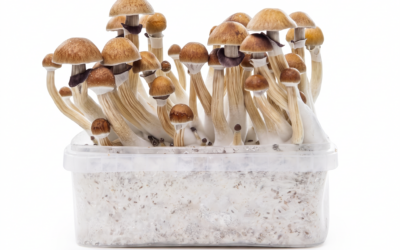
Of all the reasons people give for microdosing, creativity is one of the oldest and most enduring. Artists, writers, musicians, designers, and problem-solvers have long been curious whether a tiny, sub-perceptual dose of psilocybin truffles can help ideas flow more freely. But does it actually work — and if you want to try it, how do you do it properly? This is an honest guide, without the hype.
The honest short version
Many creative people who microdose report freer-flowing ideas, looser thinking, and an easier time getting into a creative flow. The science is still early and mixed — some of the effect may be expected. That doesn't make it worthless; it means going in with realistic expectations, a proper protocol, and accurate dosing. This guide shows you how.
Why Creativity and Psychedelics Are So Linked
The connection between psychedelics and creativity goes back decades. Some of the earliest psychedelic research in the 1960s looked specifically at whether these compounds could enhance creative problem-solving, and the cultural association — artists and musicians drawing on psychedelic experiences — runs even deeper. Microdosing is the modern, low-key version of that long-standing curiosity: not a full creative journey, but a subtle daily nudge.
The theory behind it is appealing. Psychedelics appear to loosen the brain's usual patterns of thinking, making unexpected connections between ideas more likely. Even at microdose levels, the hope is that this translates into the kind of loose, associative thinking that creativity thrives on. Whether the evidence backs that up is a more complicated question, which we'll get to honestly.
What Creative People Actually Report
Across surveys and communities, creative microdosers describe a fairly consistent set of effects on their work. The most common reports include:
-
Freer idea generation — ideas arriving more readily, with less of the usual internal censor.
-
Looser, more associative thinking — connections between unrelated ideas appearing more easily.
-
Easier creative flow — getting absorbed in creative work more quickly and staying there longer.
-
Reduced creative anxiety — less fear of the blank page, more willingness to experiment and make mistakes.
-
Fresh perspective — seeing a familiar project or problem from a new angle.
These are subjective reports, not guarantees — and creativity is notoriously hard to measure. But the consistency of these themes is why the creative use case has remained one of the most popular reasons to microdose.
What Does the Science Say?
Here's where honesty matters more than a sales pitch. The research on microdosing and creativity is really mixed, and we're not going to pretend otherwise.
Some early studies found that microdosing was associated with improvements on certain creativity-related tasks, particularly divergent thinking — the ability to generate many different ideas. But other, more rigorous placebo-controlled studies have found that much of the reported benefit may come from expectation rather than the compound itself. When people don't know whether they've taken a microdose or a placebo, the measurable creative boost often shrinks or disappears.
What does this mean practically? Two honest takeaways. First, the research isn't settled — the studies are small, creativity is hard to measure, and stronger research is ongoing. Second, even where expectation plays a role, many creative people find the practice really useful in their actual work, and a microdosing routine often comes bundled with other good creative habits (intention, reflection, dedicated creative time) that help on their own.
|
Our honest position We're not going to claim microdosing is a proven creativity hack — the science doesn't support that yet. What we can say is that many creative people find it a valuable part of their process, and if you want to try it, doing it properly gives you the best chance of a real result. This is not medical advice, and microdosing is not a treatment for anything. |
Want to try it for yourself?
Our microdosing kits include pre-measured truffles, and a clear manual. Everything you need to start a creative routine accurately. Grown fresh in the Netherlands and shipped discreetly across the EU.
How to Microdose for Creativity, Step by Step
If you want to try microdosing to support your creative work, here's how to do it properly.
Step 1: Get your dose right
Start low — around 0.5 grams of fresh truffle. A microdose should be sub-perceptual: you want to feel normal, just perhaps a little freer, not altered. If you notice visuals or feel like you're tripping, the dose is too high and will hinder creative work rather than help it. Accurate weighing with a precision scale is essential.
Step 2: Choose a protocol
Microdosing works on a schedule with rest days to avoid tolerance. The two most common:
-
The Fadiman protocol: One dose every third day. The most widely used schedule.
-
The Stamets protocol: Several days on, followed by rest days, often used for cognitive and creative goals.
See our microdosing protocols explained for a full breakdown.
Step 3: Pair it with creative work
This is the key for creativity specifically. A microdose is a subtle nudge, not a magic wand — it works best when you actually sit down to create. Take your dose in the morning, then deliberately schedule creative work for the hours afterwards. The combination of a slightly looser headspace and dedicated creative time is where people report the most benefit.
Step 4: Track what happens
Keep a simple log: your dose, what you worked on, and how the creative session felt. Over a few weeks you'll have real insight into whether it's helping your work specifically — rather than relying on a vague impression. Tracking also helps separate genuine effects from ordinary creative ups and downs.
Step 5: Cycle and rest
Run a microdosing cycle for 4 to 8 weeks, then take a break of a few weeks. This keeps the practice fresh and gives you a clear baseline to compare against. Microdosing is best as an occasional creative tool, not a permanent daily habit.

Why Accurate Dosing Matters So Much
For creative work, precision is everything. Too little and you'll feel nothing. Too much and you'll tip into perceptible effects that make focused creative work harder, not easier — the opposite of what you want. Fresh truffles vary in density and water content, so guessing by eye easily leads to doses that are double or half what you intended.
A precision scale measuring to 0.01 g is essential for a consistent routine. This is exactly why our microdosing kits include a precision scale alongside pre-measured truffles and a manual — so you can dose accurately from day one.
Who Should Be Cautious
Microdosing isn't suitable for everyone. Avoid it, or consult a qualified professional first, if you:
-
Have a personal or family history of psychosis, schizophrenia, or bipolar disorder
-
Take SSRIs, MAOIs, lithium, tramadol, or other serotonergic medications
-
Are pregnant or breastfeeding
-
Have a heart condition
If none of these apply and you're a healthy adult, microdosing is generally considered low-risk when done sensibly — but it remains your responsibility to make an informed decision, and this article is not a substitute for professional medical advice.
Frequently Asked Questions
Does microdosing actually boost creativity?
Many creative people report that it does, but the scientific evidence is early and mixed — some benefit may come from expectation. It's worth trying with realistic expectations and proper tracking to see whether it helps your work specifically. It is not a proven or guaranteed creativity tool.
Will I be able to work while microdosing?
Yes — that's the whole point. A correct microdose is sub-perceptual, so you function normally, ideally with a slightly freer, more associative headspace. If you feel altered or see visuals, the dose is too high.
How much should I take for creativity?
Start with around 0.5 grams of fresh truffle in the morning, adjusting within the 0.5–1.5 g range based on your response. The right dose is one you don't consciously feel beyond a subtle lift.
When should I take it for creative work?
In the morning, then schedule creative work for the hours afterwards. The subtle effects are usually most noticeable in the first several hours, which lines up well with a creative session.
Which truffles are best for microdosing?
Milder, consistent varieties are easiest to dose accurately. Pre-measured microdosing kits remove the guesswork entirely, which is why they're the most popular starting point.
Getting Started
If you're curious about microdosing for creativity, the honest advice is this: approach it with realistic expectations, dose accurately, follow a sensible protocol, pair it with real creative work, and track your results. Treated that way — as one tool among many rather than a magic solution — plenty of creative people find it a genuinely valuable part of their process.
Want to try it for yourself?
Our microdosing kits include pre-measured truffles, and a clear manual. Everything you need to start a creative routine accurately. Grown fresh in the Netherlands and shipped discreetly across the EU.
This article is for informational and educational purposes only and is not medical advice. Microdosing is not a proven treatment for any condition, and the scientific evidence remains limited. Magic truffles are intended for adults (18+) only and are not suitable for everyone. Mindrush only sells products that are legal under Dutch law. The legal status of psilocybin-containing products varies by country; readers are responsible for verifying the laws that apply to them. Consult a qualified professional if you have any health concerns. Always use responsibly.