Short answer: no. There is no legal psilocybin supplement in the European Union. Psilocybin and psilocin are controlled under the UN Convention on Psychotropic Substances, so they cannot be sold as a food supplement, in a pharmacy or on marketplaces such as Amazon. Products sold online as “legal psilocybin” pills or gummies usually contain something else entirely, sometimes undeclared. Functional mushrooms such as lion’s mane, reishi or cordyceps are legal supplements, but they contain no psilocybin and are not psychedelic.
This guide explains why the confusion exists, what is really inside products marketed as legal alternatives, how functional mushrooms differ from psilocybin mushrooms and where magic truffles fit in. Sources are listed at the bottom.
Why people search for a psilocybin supplement
Psilocybin is in the news more than ever. Clinical trials on depression, programmes in Czechia and Germany and talk of future approvals (see our overview of psilocybin therapy in Europe) make it sound like a wellness product that will soon be on pharmacy shelves. At the same time, the supplement aisle is full of “mushroom” capsules, coffees and gummies. It is easy to assume these overlap.
They do not. The word “mushroom” covers two completely different groups:
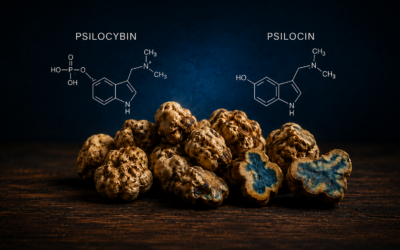
- Psilocybin mushrooms and truffles: species such as Psilocybe cubensis and the sclerotia (truffles) of several Psilocybe species. They contain psilocybin, which the body converts to psilocin. Our psilocybin guide explains how it works.
- Functional mushrooms: culinary and traditional species such as lion’s mane (Hericium erinaceus), reishi, cordyceps, chaga and shiitake. They contain compounds like beta-glucans, hericenones and erinacines, but no psilocybin.
Why psilocybin cannot be sold as a supplement
Psilocybin and psilocin are listed in Schedule I of the 1971 UN Convention on Psychotropic Substances, the strictest category. Every EU member state has signed this treaty and controls both substances under national drug law. That has three practical consequences:
- No supplement status. A controlled substance cannot be placed on the market as a food or food supplement. A product that really contains psilocybin is not a supplement in the legal sense, whatever the label says.
- No pharmacy sales. Psilocybin is not an approved medicine anywhere in the EU. Access is limited to clinical trials and a few tightly controlled national schemes.
- No marketplace sales. Large marketplaces do not allow controlled substances. Listings that use the word “psilocybin” are either functional mushroom products using it as a search term, or products that do not contain what they claim.
The Netherlands is a special case for one product only. Fresh and dried magic mushrooms were added to List II of the Dutch Opium Act in 2008, but magic truffles (sclerotia) are not on that list and can legally be sold in the Netherlands. They are a natural product, not a supplement, and their content varies. More on that in are magic truffles legal in the Netherlands.
What is inside “legal psilocybin” pills and gummies
Online you will find capsules, gummies and chocolates sold as “legal psychedelic mushrooms”, “psilocybin alternative” or “microdosing candy”. Independent testing and official warnings show a clear pattern: what is on the label is often not what is in the product.
| Finding | Source | What was found |
|---|---|---|
| 12 “magic mushroom” gummies and chocolates bought in shops | Oregon State University, JAMA Network Open (2025) | No psilocybin in any product. Instead: caffeine, kava and hemp extracts and synthetic psychedelic-like compounds that were not declared. |
| Recalled “microdosing” chocolate bars and gummies (US, 2024) | US FDA testing, reported August 2024 | Muscimol, acetylpsilocin, psilocin, the prescription drug pregabalin and kavalactones. The products were linked to serious illness. |
| Gummies containing fly agaric toxin (Germany, 2025) | German Federal Institute for Risk Assessment (BfR) | Muscimol, mainly sold online. Poison centres reported impaired consciousness up to coma. Children are particularly at risk because the products look like sweets. |
| Three gummy products, one labelled as “legal psychedelic mushrooms” (Czechia, 2024) | Czech Agriculture and Food Inspection Authority (CAFIA) | Muscimol at levels assessed as harmful to health. |
The most common substitute is fly agaric (Amanita muscaria), a completely different mushroom. Its main active compounds, ibotenic acid and muscimol, act on a different system in the brain than psilocybin and carry their own risks. The US FDA has stated that Amanita muscaria is not approved for use in food. In short: a product sold as a “legal psilocybin supplement” is at best a functional mushroom blend with misleading marketing, and at worst an unlabelled mix of unknown substances.
Functional mushrooms vs psilocybin mushrooms
Functional mushroom supplements are a legitimate product category. They are sold as food supplements, are not psychoactive and do not cause a trip. Below is how the two groups compare.
| Functional mushrooms (lion’s mane, reishi, cordyceps) | Psilocybin mushrooms and truffles | |
|---|---|---|
| Main compounds | Beta-glucans, hericenones, erinacines, triterpenes | Psilocybin and psilocin |
| Psychoactive | No | Yes |
| Legal status in the EU | Sold as food supplements, subject to food law | Psilocybin controlled in every member state; truffles legal in the Netherlands |
| Forms | Capsules, extract drops, powders | Fresh truffles, grow kits, mushrooms where permitted |
| Health claims allowed | Only claims authorised in the EU Register, none exist for mushrooms themselves | Not applicable, not a food |
| Daily use | Designed for it | Not designed for it |
One point deserves extra attention: under EU rules, food supplements may only carry health claims that are authorised and listed in the EU Register of nutrition and health claims. There are currently no authorised claims for mushroom extracts as such. So when a mushroom supplement promises sharper memory, better sleep or a stronger immune system, that is marketing, not an approved claim. Our guide on what to look for when buying mushroom supplements covers quality points like fruiting body versus mycelium and extraction method.
What we offer, and what we do not
At Mindrush we keep these categories strictly separate, so you always know what you are buying.
- Supplements: Lion’s Mane extract drops and the Essential 8 Mushroom Complex capsules. Non-psychedelic food supplements, contain no psilocybin, sold without effect claims.
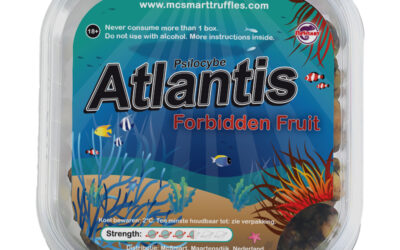
- Magic Truffles and Microdosing: natural psilocybin truffles from the Netherlands. These are not supplements. Their content varies by strain and batch, and they call for preparation and responsible use (see how to use magic truffles responsibly).
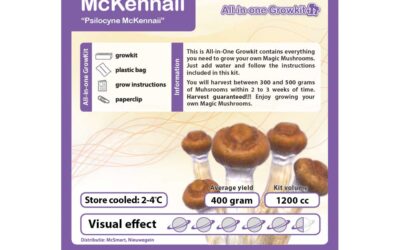
- Grow kits: for growing mushrooms yourself, where local law allows it.
Some people combine lion’s mane with microdosing, a protocol known as the Stamets Stack. We explain what it is and what is and is not known in the Stamets Stack explained. Even then, the lion’s mane is the supplement part; the psilocybin comes from truffles, not from a capsule.
How to spot a misleading “psilocybin” product
- “Legal psilocybin” anywhere outside a clinical setting. If a product claims to contain psilocybin and to be legal across Europe, one of the two statements is false.
- No species on the label. A real mushroom supplement names the species, for example Hericium erinaceus, and the part used.
- Vague “proprietary blend”. Undisclosed ingredients are exactly where synthetic compounds and muscimol have been found.
- Fly agaric or “Amanita” in the ingredients. That is not psilocybin and not a functional mushroom.
- Health or effect promises. Claims such as “boosts mood” or “trip in a gummy” are not authorised for mushroom supplements in the EU.
- No lab report. A trustworthy seller can show a certificate of analysis per batch.
Frequently asked questions
Is there a legal psilocybin supplement?
No. Psilocybin is a controlled substance under the 1971 UN Convention and national law in every EU country, so it cannot be sold as a supplement. Products marketed as legal psilocybin supplements either contain no psilocybin or contain undeclared substances.
Can you buy psilocybin pills on Amazon?
No. Large marketplaces do not allow controlled substances. Listings that mention psilocybin are usually functional mushroom products using the word as a search term, or products whose contents do not match the label.
Does lion’s mane contain psilocybin?
No. Lion’s mane (Hericium erinaceus) contains no psilocybin or psilocin and is not psychoactive. It is sold in the EU as a food supplement.
What is in “magic mushroom” gummies sold as legal?
Testing has found muscimol from fly agaric, kava, caffeine, prescription drugs and synthetic psychedelic-like compounds, often not listed on the label. In a 2025 study of 12 such products, none contained psilocybin.
Are magic truffles a supplement?
No. Magic truffles are a natural product that contains psilocybin. They are legal in the Netherlands, but they are not a food supplement and their content varies by strain and batch.
What is natural psilocybin?
Natural psilocybin is the psilocybin found in mushrooms and truffles of the Psilocybe genus, as opposed to the synthetic psilocybin used in clinical trials. Natural sources contain varying amounts, which is why content differs between strains and batches.
Sources
- EUDA drugs library: INCB Green List, psychotropic substances under international control
- EUDA: Hallucinogenic mushrooms drug profile
- Staatsblad 2008, 486: magic mushrooms added to List II of the Dutch Opium Act
- Oregon State University: Analysis of magic mushroom edibles finds no psilocybin but many undisclosed active ingredients (JAMA Network Open, September 2025)
- ConsumerAffairs: FDA test results on recalled mushroom chocolate bars (September 2024)
- BfR: Fly agaric poison, health risks of fruit gummies containing muscimol (June 2025)
- CAFIA: Products with hallucinogen originating from fly amanita (September 2024)
- Food Safety Magazine: FDA reminds industry that Amanita muscaria is not approved for food use
- European Commission: EU Register of nutrition and health claims